
Painful Periods (Dysmenorrhea): Causes, Symptoms & Relief
Painful Periods (Dysmenorrhea): Causes, Symptoms & Relief
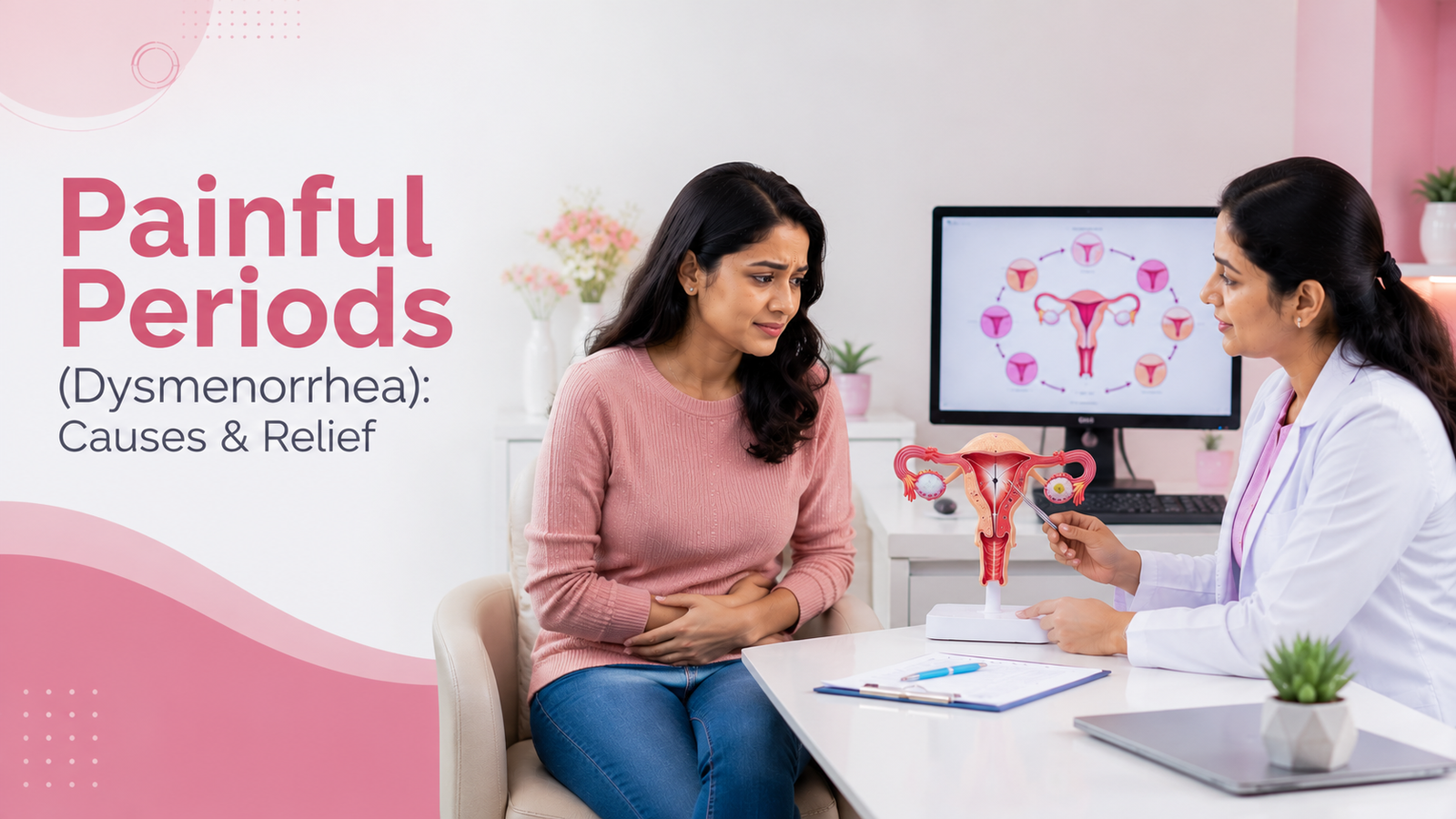
Menstrual cramps are common, but painful periods (dysmenorrhea) that interfere with daily activities should not be ignored. While mild discomfort during menstruation is normal for many women, severe or persistent pain may indicate an underlying medical condition that requires evaluation.
Understanding the causes, symptoms, and treatment options for painful periods can help you manage discomfort and protect your reproductive health.
What Are Painful Periods (Dysmenorrhea)?
Dysmenorrhea is the medical term for painful menstrual cramps that occur before or during your menstrual period.
There are two main types:
Primary Dysmenorrhea
- Caused by natural uterine contractions.
- Usually begins during adolescence.
- Not associated with an underlying disease.
Secondary Dysmenorrhea
- Caused by an underlying medical condition.
- Often develops later in life.
- Requires medical evaluation and treatment.
Common Causes of Painful Periods
1. Natural Uterine Contractions
During menstruation, the uterus contracts to shed its lining. Higher levels of prostaglandins can lead to stronger contractions and more pain.
2. Endometriosis
Tissue similar to the uterine lining grows outside the uterus, often causing severe menstrual pain.
3. Adenomyosis
The uterine lining grows into the muscular wall of the uterus, leading to heavy and painful periods.
4. Uterine Fibroids
Fibroids are non-cancerous growths that may cause pelvic pain and heavy bleeding.
5. Pelvic Inflammatory Disease (PID)
An infection of the reproductive organs can cause pelvic pain, especially during menstruation.
6. Cervical Stenosis
A narrow cervical opening may restrict menstrual flow, increasing pressure and pain.
Symptoms of Dysmenorrhea
Symptoms may include:
- Cramping pain in the lower abdomen
- Lower back pain
- Pain radiating to the thighs
- Nausea
- Vomiting
- Diarrhea
- Headache
- Fatigue
- Dizziness
Severe pain that affects work, school, or daily activities should be assessed by a doctor.
When Should You See a Gynecologist?
Consult your doctor if:
- Pain is severe or worsening.
- Pain lasts beyond your menstrual period.
- Over-the-counter pain relief is ineffective.
- Your periods become unusually heavy.
- You experience fever or unusual vaginal discharge.
- Pain begins suddenly after years of painless periods.
Early diagnosis can help identify treatable conditions such as endometriosis or fibroids.
How Are Painful Periods Diagnosed?
We may recommend:
- Medical history review
- Physical and pelvic examination
- Pelvic ultrasound
- Blood tests (if indicated)
- MRI or laparoscopy in selected cases
The evaluation depends on your symptoms and medical history.
Home Remedies for Mild Menstrual Cramps
You may find relief by:
- Drinking plenty of water
- Eating anti-inflammatory foods
- Reducing caffeine during your period
- Practicing yoga or gentle stretching
- Getting adequate rest
- Using relaxation techniques
Always consult a doctor if pain is severe or persistent.
Treatment for Painful Periods
Treatment depends on the cause.
Medications
Doctors may prescribe medications to reduce pain and inflammation or regulate hormones when appropriate.
Heat Therapy
Applying a heating pad to the lower abdomen may help relieve cramps.
Regular Exercise
Light physical activity and stretching may reduce menstrual discomfort.
Healthy Lifestyle
A balanced diet, adequate sleep, hydration, and stress management can improve overall menstrual health.
Treating Underlying Conditions
If endometriosis, fibroids, or other conditions are diagnosed, specific treatment will be recommended.