
Pregnancy Planning Checklist
Pregnancy Planning Checklist: How to Prepare for a Healthy Pregnancy
Planning a pregnancy is one of the best steps you can take to support a healthy pregnancy and give your baby the best possible start in life. Preparing your body before conception can reduce certain pregnancy risks and improve your overall well-being.
This Pregnancy Planning Checklist covers everything you should know before trying to conceive, including medical checkups, nutrition, lifestyle changes, fertility awareness, and emotional readiness.
Why Is Pregnancy Planning Important?
Preconception planning helps identify and manage health conditions before pregnancy. It also allows you to make healthy lifestyle changes that can improve fertility and reduce complications during pregnancy.
Benefits include:
- Improved maternal health
- Better fertility outcomes
- Reduced risk of birth defects
- Healthier pregnancy
- Improved baby development
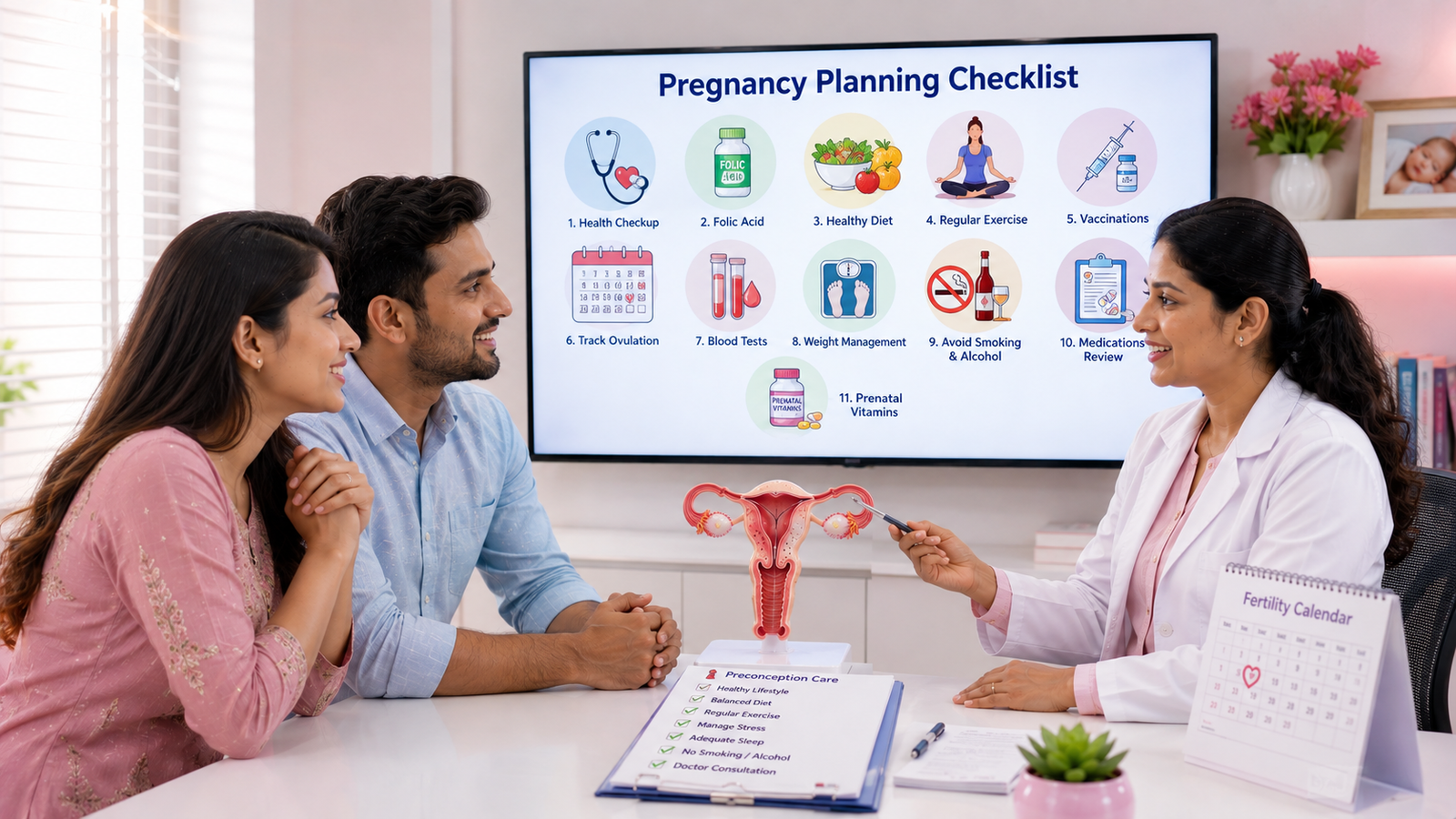
Pregnancy Planning Checklist
Schedule a Preconception Checkup
Visit a gynecologist before trying to conceive. Your doctor may:
- Review your medical history
- Discuss previous pregnancies
- Evaluate medications
- Recommend blood tests
- Assess chronic medical conditions
Start Folic Acid
Taking 400–800 mcg of folic acid daily before conception and during early pregnancy helps reduce the risk of neural tube defects.
Always follow your healthcare provider’s recommendations regarding supplements.
Eat a Healthy Diet
Focus on:
- Fresh fruits
- Vegetables
- Whole grains
- Lean protein
- Dairy or calcium-rich foods
- Iron-rich foods
Limit highly processed foods, sugary drinks, and excessive caffeine.
Maintain a Healthy Weight
Being underweight or overweight may affect fertility and pregnancy outcomes.
Speak with your doctor about achieving a healthy weight before conception.
Exercise Regularly
Aim for at least 150 minutes of moderate physical activity each week, unless advised otherwise by your healthcare provider.
Activities such as walking, swimming, and yoga can support overall health.
Review Your Medications
Some prescription and over-the-counter medications may not be safe during pregnancy.
Never stop prescribed medication without consulting your doctor.
Update Vaccinations
Your doctor may recommend checking immunity or receiving vaccines before pregnancy, depending on your health history and local guidelines.
Avoid Smoking, Alcohol, and Recreational Drugs
These substances can affect fertility and increase the risk of pregnancy complications.
If you need help quitting, speak with your healthcare provider.
Manage Chronic Health Conditions
Conditions such as:
- Diabetes
- High blood pressure
- Thyroid disorders
- Epilepsy
- Asthma
should be well-controlled before conception.
Track Your Menstrual Cycle
Understanding your menstrual cycle can help identify your fertile window and improve your chances of conception.
Ovulation tracking methods include:
- Calendar tracking
- Ovulation predictor kits
- Basal body temperature monitoring
Prioritize Mental Health
Preparing emotionally for pregnancy is just as important as physical health.
Manage stress through:
- Meditation
- Yoga
- Regular sleep
- Family support
- Counseling if needed
Encourage Your Partner to Prepare Too
Male fertility also plays an important role.
Partners should:
- Maintain a healthy lifestyle
- Eat a balanced diet
- Exercise regularly
- Avoid smoking and excessive alcohol
- Seek medical evaluation if fertility concerns exist
When Should You See a Fertility Specialist?
Consult a fertility specialist if:
- You’re under 35 and have been trying to conceive for 12 months.
- You’re 35 or older and have been trying for 6 months.
- You have irregular periods.
- You have PCOS, endometriosis, or blocked fallopian tubes.
- Your partner has fertility concerns.
Common Mistakes to Avoid
Avoid:
- Self-medicating with supplements
- Ignoring chronic health conditions
- Delaying medical evaluation when needed
- Smoking or consuming alcohol
- Assuming fertility problems affect only women
Why Choose Naari Women's Hospital?
At Naari Women’s Hospital, we provide comprehensive preconception counseling, fertility evaluation, pregnancy planning, and antenatal care. Our experienced gynecologists help couples prepare for a healthy pregnancy through personalized guidance, medical evaluation, and evidence-based care.