
Gestational Diabetes During Pregnancy: Symptoms, Screening and Management
What are the different types of fibroids?
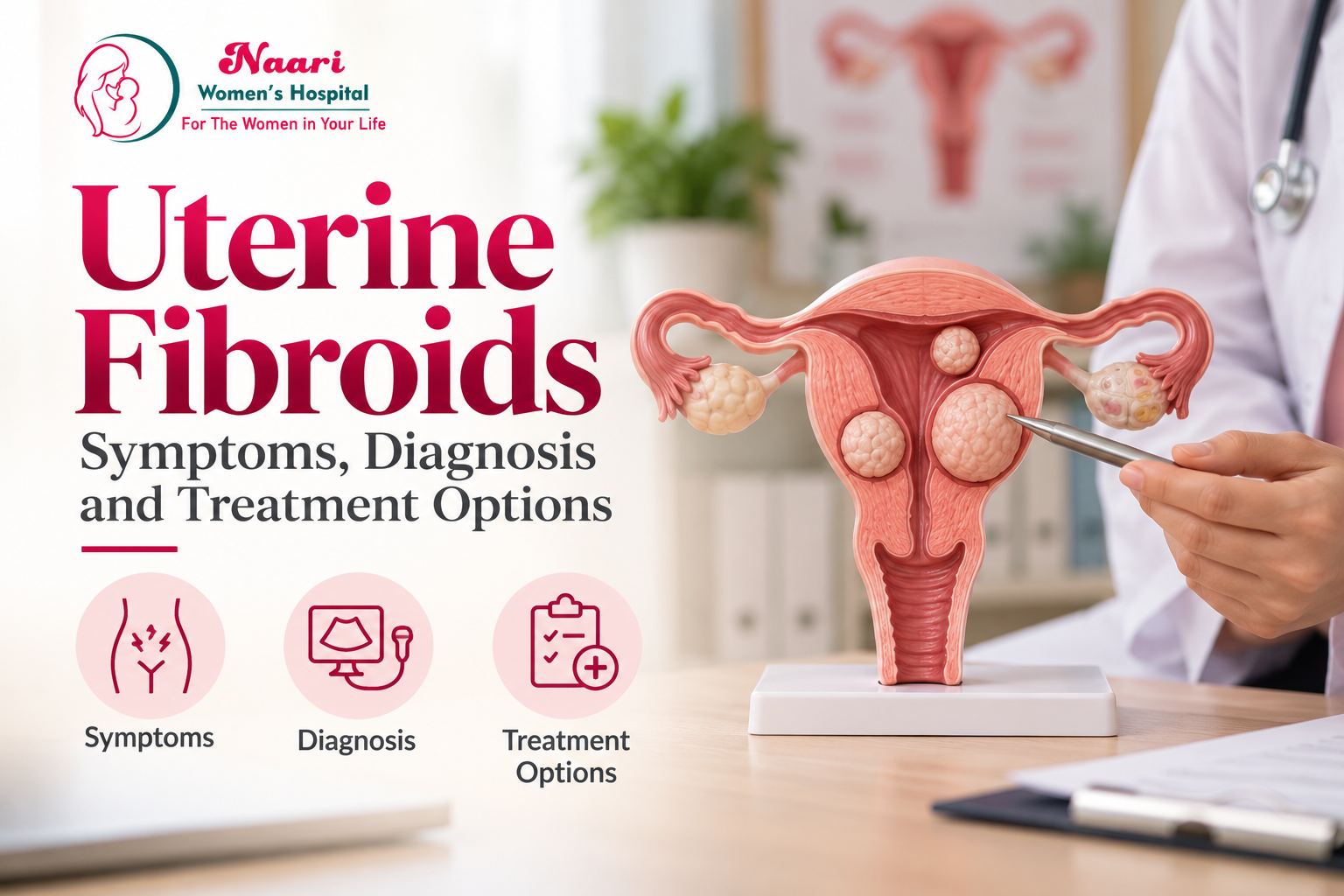
Intramural fibroids develop within the muscular wall of the uterus. Submucosal fibroids grow towards or into the uterine cavity and may contribute to heavy bleeding. Subserosal fibroids grow towards the outer surface and may cause pressure symptoms depending on their size and position. Location can be as important as size.
Common symptoms
- Heavy, prolonged or painful menstrual periods.
- Pelvic pressure, fullness or lower abdominal discomfort.
- Frequent urination or difficulty emptying the bladder.
- Constipation or lower back discomfort.
- Pain during sexual activity.
- Difficulty conceiving or pregnancy-related concerns in some cases, depending on fibroid location.
These symptoms can also occur with other conditions. Symptoms alone cannot confirm that fibroids are the cause.
How are fibroids diagnosed?
Your gynaecologist may ask about menstrual bleeding, pain, urinary or bowel symptoms, pregnancy plans, medical history and medicines. A physical or pelvic examination may be recommended. Ultrasound is commonly used to assess the uterus and identify the number, size and location of fibroids. Further tests such as hysteroscopy or MRI may be considered in selected situations.
Do all fibroids need treatment?
No. If fibroids cause no symptoms and are not affecting health or quality of life, observation and review may be appropriate. Decisions depend on symptoms, location and size, age, general health, proximity to menopause and pregnancy plans.
Treatment options
Treatment is individualised after discussing benefits, limitations and future pregnancy plans.
- Observation: monitoring symptoms and reviewing fibroids when clinically appropriate.
- Medicines: some medicines may help manage heavy bleeding or pain; suitability and side effects need medical review.
- Myomectomy: a procedure to remove fibroids while preserving the uterus. It may be considered for selected women who wish to retain the possibility of pregnancy.
- Hysterectomy: removal of the uterus is a definitive treatment, but pregnancy is no longer possible. It is considered only after careful discussion of alternatives.
- Other specialist procedures may be considered depending on fibroid characteristics, availability and individual suitability.
Fibroids, fertility and pregnancy
Many women with fibroids conceive and have healthy pregnancies. Some fibroids, particularly those that change the shape of the uterine cavity, may be associated with fertility or pregnancy complications. The effect depends on size, number and location. Fibroids should not automatically be assumed to be the cause of infertility; other factors need assessment.
When should you consult a gynaecologist?
Arrange an appointment if periods become heavier or more painful, you have persistent pelvic pressure, urinary or bowel symptoms, pain during sex or difficulty conceiving. Seek urgent medical care for very heavy bleeding with faintness or severe sudden pelvic pain.
Frequently asked questions
Are fibroids cancerous?
Most uterine fibroids are benign (non-cancerous). New or concerning symptoms should still be assessed.
Can fibroids disappear?
Fibroids may shrink after menopause as hormone levels change, but the pattern varies. Follow your clinician’s advice.
Can I get pregnant with fibroids?
Many women do. Whether a fibroid affects fertility or pregnancy depends on its location and other individual factors.
Does every fibroid require surgery?
No. Some need no treatment; others may be managed with medicines or procedures.
Medical note
This article is for general education and does not replace medical advice, diagnosis or treatment. Treatment decisions should follow an individual assessment by a qualified gynaecologist.
References: ACOG – Uterine Fibroids: https://www.acog.org/womens-health/faqs/uterine-fibroids | NHS – Fibroids: https://www.nhs.uk/conditions/fibroids/
Why Choose Naari Women's Hospital?
At Naari Women’s Hospital, our maternity team provides comprehensive care during labor and delivery, including assessment of labor symptoms, fetal monitoring, management of ruptured membranes, and personalized guidance for mothers and babies.
Our experienced obstetricians are equipped to assess concerns promptly and help you understand the safest next steps for your pregnancy.