
Gestational Diabetes During Pregnancy: Symptoms, Screening and Management
What counts as a heavy period?
- Bleeding for more than seven days.
- Needing to change a pad or tampon every one to two hours, or repeatedly soaking through menstrual products.
- Needing more than one menstrual product at a time or changing products during the night.
- Passing large clots or avoiding usual activities because of bleeding.
- Feeling unusually tired, weak, dizzy or breathless, which may be associated with anaemia.
If bleeding affects work, sleep, exercise or daily routine, discuss it with a healthcare professional, even if it has been happening for a long time.
Possible causes
Heavy periods can have several causes, including:
- Uterine fibroids or endometrial polyps.
- Adenomyosis, where tissue similar to the uterine lining is found within the muscular wall of the uterus.
- Hormonal or ovulation-related changes, including those associated with PCOS, thyroid disorders, adolescence or perimenopause.
- Bleeding or clotting disorders.
- Certain medicines, including some blood-thinning medicines, or some contraceptive methods.
- Pregnancy-related causes, infection or, less commonly, cancers of the reproductive system.
Sometimes no clear cause is identified. The cause cannot be determined from the amount of bleeding alone.
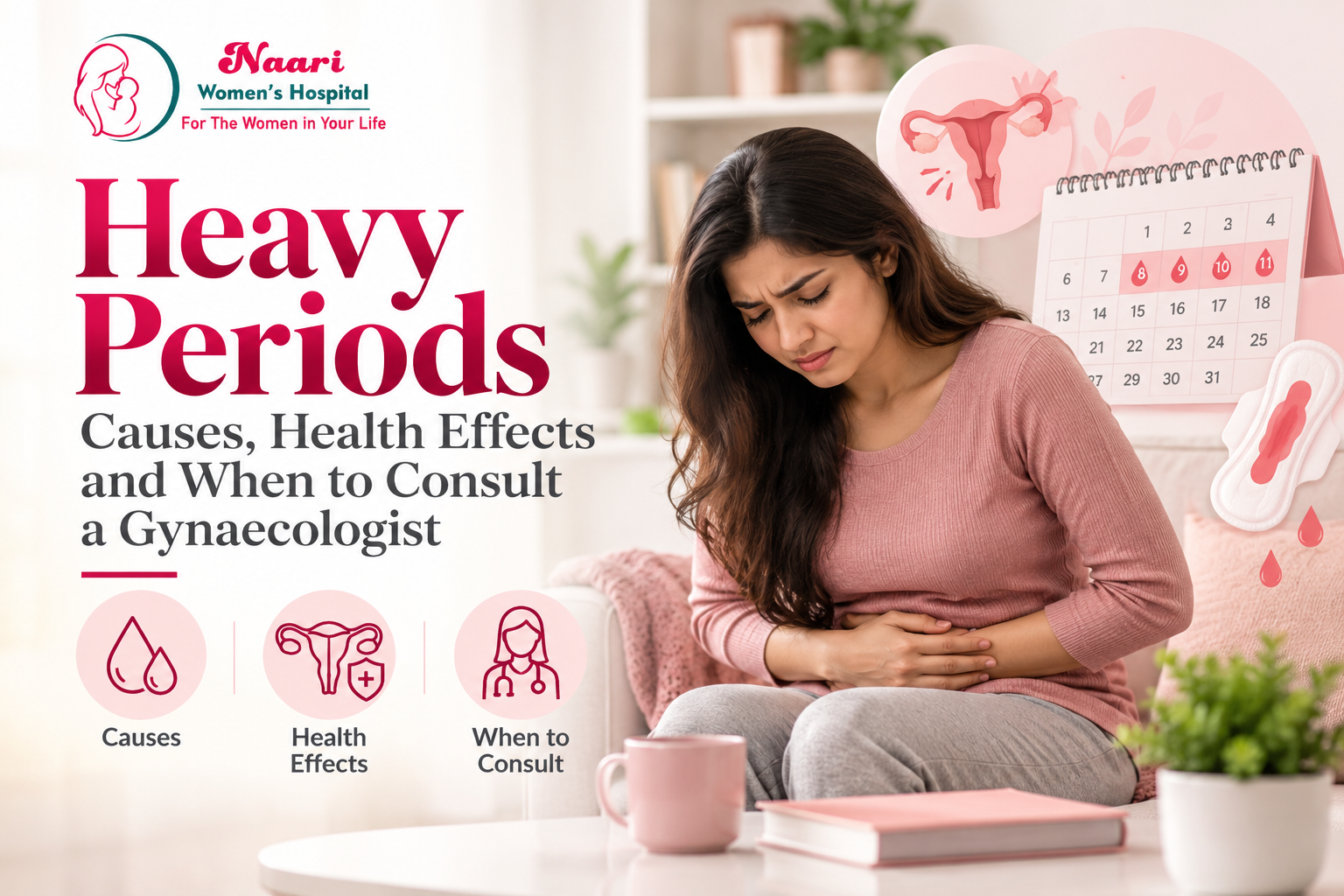
How can heavy periods affect health?
Repeated heavy blood loss can reduce iron levels and may lead to iron-deficiency anaemia. Symptoms can include tiredness, weakness, headaches, dizziness, palpitations and shortness of breath. Heavy bleeding can also cause pain, anxiety about leakage and disruption to daily activities.
How is it evaluated?
Your gynaecologist may ask about period dates and duration, how often you change menstrual products, clots, pain, bleeding between periods, medicines, contraception and pregnancy possibility. Keeping a period diary for a few cycles can help. Depending on your symptoms, assessment may include an examination, pregnancy test, blood tests and pelvic ultrasound. In selected cases, hysteroscopy or a sample of the uterine lining may be advised. Not every woman needs every test.
Treatment options
Treatment depends on the cause, severity, age, medical history, contraception needs and future pregnancy plans. Options may include:
- Medicines to reduce bleeding or pain, prescribed according to your health history.
- Hormonal treatments or certain contraceptive options that may make periods lighter or more regular for suitable patients.
- Iron treatment if iron deficiency or anaemia is confirmed.
- Treatment of an underlying condition such as fibroids, polyps or a thyroid disorder.
- A procedure or surgery in selected cases when symptoms persist or an underlying structural cause needs treatment.
Do not start hormonal medicines, iron supplements or painkillers on your own to manage persistent heavy bleeding. The right treatment depends on diagnosis and medical history.
When is it urgent?
Seek urgent medical care if you are soaking through a pad or tampon about every hour for several hours, especially if you feel faint, dizzy, breathless, have chest pain or feel severely weak. If pregnancy is possible and you have heavy bleeding or significant abdominal pain, seek prompt assessment. Bleeding after menopause should always be assessed.
What to track before your appointment
- First and last day of each period.
- How often you change pads, tampons or other products.
- Leakage, clots or bleeding between periods.
- Pain, dizziness, fatigue or breathlessness.
- Medicines, contraception and any possibility of pregnancy.
Frequently asked questions
Are heavy periods normal for some women?
Flow varies, but bleeding lasting more than seven days, requiring very frequent product changes or affecting daily life should be discussed with a clinician.
Can heavy periods cause anaemia?
Yes. Repeated blood loss can lead to iron deficiency and anaemia.
Does a heavy period always mean fibroids?
No. Hormonal changes, adenomyosis, polyps, bleeding disorders, medicines and other conditions may also be involved.
Should I wait until the next cycle?
Do not wait if bleeding is severe, you feel faint or breathless, or pregnancy is possible. For ongoing heavy periods, arrange an appointment.
Medical note
This article provides general health information and is not a substitute for an individual consultation. A gynaecologist can assess the cause and recommend appropriate investigations and treatment.
References: ACOG – Heavy Menstrual Bleeding: https://www.acog.org/womens-health/faqs/heavy-menstrual-bleeding | ACOG – Heavy and Abnormal Periods: https://www.acog.org/womens-health/faqs/heavy-and-abnormal-periods | NHS – Heavy Periods: https://www.nhs.uk/conditions/heavy-periods/
Why Choose Naari Women's Hospital?
At Naari Women’s Hospital, our maternity team provides comprehensive care during labor and delivery, including assessment of labor symptoms, fetal monitoring, management of ruptured membranes, and personalized guidance for mothers and babies.
Our experienced obstetricians are equipped to assess concerns promptly and help you understand the safest next steps for your pregnancy.