
Are Your Fallopian Tubes Open or Blocked?
Understanding the HSG Test for Fertility
Are Your Fallopian Tubes Open or Blocked? Understanding the HSG Test for Fertility
When a couple is trying to conceive but pregnancy is not happening, one of the most important things doctors check is whether the fallopian tubes are open or blocked. A simple diagnostic test called Hysterosalpingography (HSG) can help identify this issue and guide the next steps in fertility treatment.
What Is an HSG Test?
Doctors usually recommend an HSG test in the following situations:
Difficulty getting pregnant after trying for several months or years
Suspected blocked fallopian tubes
Repeated miscarriages
To check the shape and condition of the uterus
After certain fertility treatments or surgeries
Blocked fallopian tubes can prevent the sperm and egg from meeting, making pregnancy difficult. The HSG test helps detect these blockages quickly.
How the HSG Procedure Works
The HSG test is usually done after the menstrual period but before ovulation, typically between day 7 and day 10 of the menstrual cycle.
Step-by-Step Procedure
The patient lies on an X-ray table.
A speculum is inserted into the vagina (similar to a Pap smear test).
A thin tube (catheter) is placed through the cervix.
A special contrast dye is injected into the uterus.
X-ray images are taken as the dye flows through the uterus and fallopian tubes.
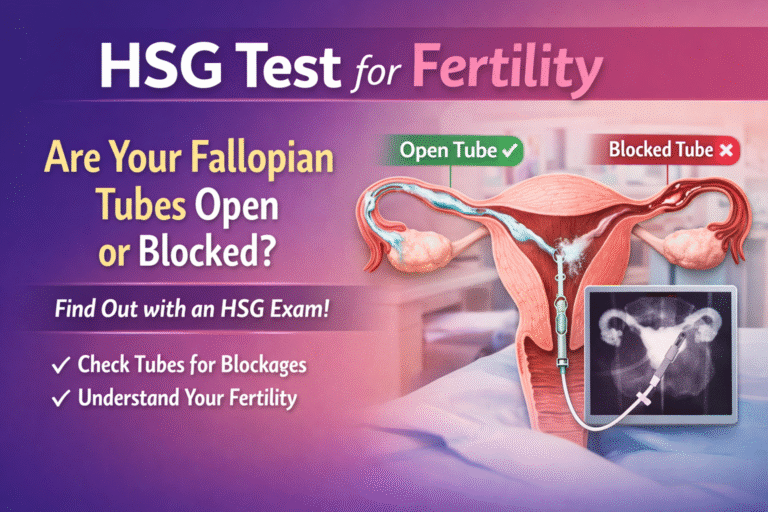
If the dye flows freely, the tubes are open. If it stops, it may indicate a blockage.
Is the HSG Test Painful?
Most women feel mild cramping or discomfort, similar to menstrual cramps. The procedure usually takes 10–15 minutes and does not require hospitalization.
Some women may experience:
Mild abdominal cramps
Slight spotting
Temporary discomfort
These symptoms usually disappear within a few hours.
Benefits of the HSG Test
The HSG test offers several advantages:
Helps detect blocked fallopian tubes
Identifies abnormalities in the uterus
Quick and minimally invasive
Helps doctors plan the right fertility treatment
Sometimes even improves fertility temporarily by flushing the tubes
What Happens After the Test?
After the HSG test, most women can return to their normal activities the same day. Your doctor will review the X-ray images and discuss the results.
Possible outcomes include:
Normal result – fallopian tubes are open
Partial blockage – one tube may be blocked
Complete blockage – both tubes may be blocked
Based on the results, doctors may suggest further fertility treatments or procedures.