
Birth Plan Checklist
Birth Plan Checklist: How to Prepare for Labor & Delivery
As your due date approaches, creating a birth plan can help you communicate your preferences for labor, delivery, and immediate newborn care with your healthcare team. While every birth is unique and plans may change based on medical needs, having a checklist can help you feel more prepared and confident.
This Birth Plan Checklist outlines the key decisions to consider before welcoming your baby.
What Is a Birth Plan?
A birth plan is a document that outlines your preferences for:
- Labor and delivery
- Pain management
- Medical interventions
- Birth partner support
- Baby’s care immediately after birth
- Post-delivery recovery
It serves as a guide for your healthcare team while allowing flexibility if unexpected situations arise.
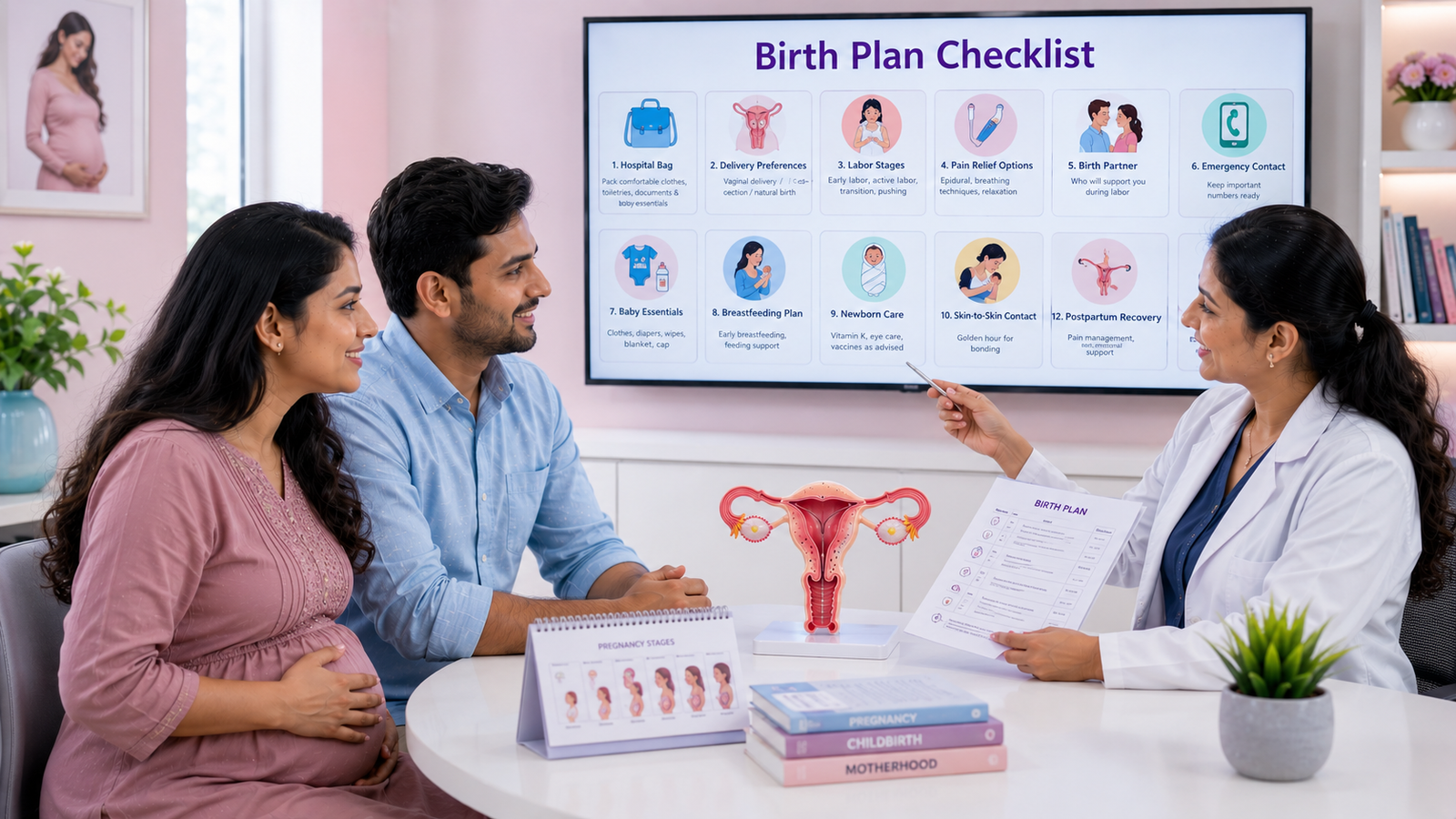
Birth Plan Checklist
Choose Your Birth Hospital
Select a hospital that offers:
- Experienced obstetricians
- Emergency maternity care
- Neonatal support if needed
- Comfortable maternity facilities
Discuss Your Delivery Preferences
Talk with your doctor about:
- Normal vaginal delivery
- Assisted delivery if required
- Cesarean section if medically necessary
Remember that the safest delivery method depends on your medical condition and your baby’s health.
Decide on Pain Relief Options
Discuss available options, such as:
- Breathing and relaxation techniques
- Epidural anesthesia
- Other medically appropriate pain relief methods
Your doctor can explain the benefits and possible risks of each option.
Choose Your Birth Partner
Decide who will accompany and support you during labor, if permitted by hospital policy.
Prepare Your Hospital Bag
Pack essentials for both mother and baby, including:
For Mother
- Comfortable clothing
- Toiletries
- Maternity pads
- Slippers
- Important documents
For Baby
- Baby clothes
- Blanket
- Diapers
- Baby cap
- Baby wipes
Discuss Newborn Care Preferences
Consider discussing:
- Skin-to-skin contact after birth
- Early breastfeeding
- Delayed cord clamping (when appropriate)
- Newborn vaccinations and screenings
These decisions should always follow your doctor’s recommendations and your baby’s medical condition.
Understand Possible Medical Interventions
Your healthcare team may discuss situations where interventions could become necessary, including:
- Labor induction
- Assisted vaginal delivery
- Emergency cesarean section
Being informed can help reduce anxiety if plans change.
Plan for Breastfeeding
Discuss:
- Early initiation of breastfeeding
- Lactation support
- Feeding positions
- Common breastfeeding challenges
Arrange Transportation
Keep transportation ready for when labor begins.
Have emergency contact numbers easily accessible.
Prepare Emotionally
Labor is both a physical and emotional experience.
Helpful preparation includes:
- Prenatal education classes
- Breathing exercises
- Relaxation techniques
- Adequate sleep
- Support from family
Signs It's Time to Go to the Hospital
Contact your healthcare provider or visit the hospital if you experience:
- Regular, strong contractions
- Water breaking
- Heavy vaginal bleeding
- Reduced baby movements
- Severe abdominal pain
Always follow your doctor’s instructions regarding when to seek medical care.
Why Is a Birth Plan Helpful?
A birth plan can:
- Improve communication with your healthcare team
- Help you understand your options
- Reduce uncertainty before delivery
- Encourage informed decision-making
However, flexibility is essential because medical needs during labor can change unexpectedly.
Why Choose Naari Women's Hospital?
At Naari Women’s Hospital, we provide personalized maternity care from pregnancy through childbirth and postpartum recovery. Our experienced obstetricians work closely with expecting parents to create individualized birth plans while prioritizing the safety of both mother and baby.