
Different Signs of Menopause
Different Signs of Menopause: Symptoms Every Woman Should Know
Menopause is a natural stage in a woman’s life that marks the end of menstrual cycles. It usually occurs between the ages of 45 and 55 and happens when the ovaries gradually stop producing reproductive hormones such as estrogen and progesterone.
While menopause is a normal biological process, many women experience a variety of physical and emotional symptoms. Understanding the different signs of menopause can help women manage this transition more comfortably and seek medical guidance when needed.
What is Menopause?
Menopause is officially diagnosed when a woman has not had a menstrual period for 12 consecutive months. This stage represents the end of fertility, but it is also the beginning of a new phase of life.
The transition period leading to menopause is called perimenopause, during which symptoms often begin to appear.
Common Signs of Menopause
1. Irregular Periods
One of the earliest signs of menopause is a change in the menstrual cycle. Periods may become:
Irregular
Lighter or heavier than usual
Shorter or longer in duration
Eventually, periods stop completely.
2. Hot Flashes
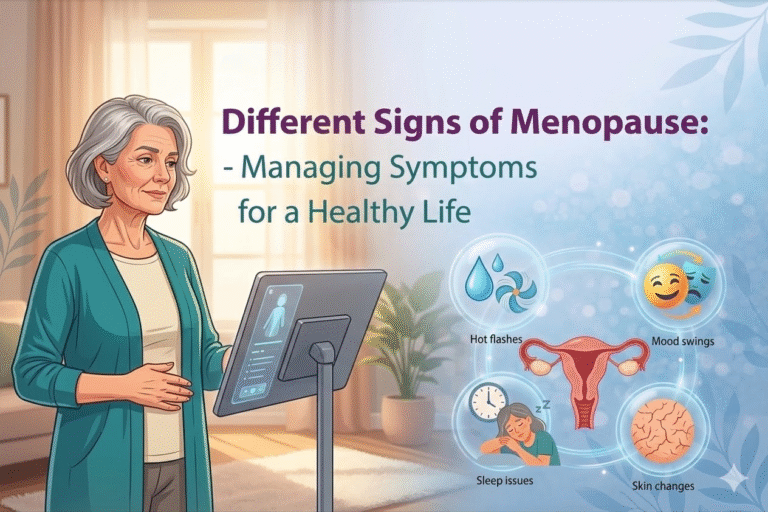
Hot flashes are one of the most common menopause symptoms. Women may feel sudden warmth spreading through the upper body, face, and neck. These episodes may last a few seconds to several minutes.
Symptoms may include:
Sweating
Redness of skin
Rapid heartbeat
3. Night Sweats
Night sweats are hot flashes that occur during sleep. They may disturb sleep and lead to fatigue during the day.
Women may wake up with:
Excessive sweating
Chills
Difficulty falling back asleep
4. Mood Changes
Hormonal changes during menopause can affect emotional health.
Common emotional symptoms include:
Irritability
Anxiety
Mood swings
Depression
Maintaining a healthy lifestyle and emotional support can help manage these changes.
5. Sleep Problems
Many women experience sleep disturbances during menopause.
These may include:
Difficulty falling asleep
Waking up frequently at night
Poor sleep quality
Sleep problems are often linked to night sweats and hormonal changes.
6. Vaginal Dryness
Reduced estrogen levels can cause vaginal dryness and discomfort.
This may lead to:
Pain during intercourse
Irritation or itching
Increased risk of infections
Medical treatments and lubricants can help relieve these symptoms.
7. Weight Gain and Metabolism Changes
During menopause, the body’s metabolism may slow down, making it easier to gain weight, especially around the abdomen.
Regular exercise and balanced nutrition can help manage weight during this phase.
8. Reduced Bone Density
Lower estrogen levels can weaken bones, increasing the risk of osteoporosis.
Women are advised to:
Consume calcium-rich foods
Take vitamin D
Maintain regular physical activity
When Should You See a Doctor?
Although menopause is a natural process, you should consult a healthcare professional if you experience:
Severe hot flashes
Heavy or unusual bleeding
Persistent mood changes
Severe sleep problems
A gynecologist can help provide treatment options and lifestyle guidance to improve quality of life.
Tips to Manage Menopause Symptoms
Women can manage menopause symptoms with simple lifestyle changes:
Maintain a healthy diet
Exercise regularly
Practice stress management techniques
Get enough sleep
Avoid smoking and excessive alcohol
Medical treatments such as hormone therapy may also be recommended in some cases.