
HSG Test: Procedure & Benefits
HSG Test: Procedure, Benefits, Risks & What to Expect
If you’re having difficulty conceiving, your doctor may recommend an HSG Test (Hysterosalpingography) as part of your fertility evaluation. This simple imaging test helps determine whether your fallopian tubes are open and whether the uterus has any structural abnormalities that could affect pregnancy.
Understanding the HSG test can help reduce anxiety and prepare you for the procedure.
What Is an HSG Test?
An HSG (Hysterosalpingography) is a specialized X-ray procedure that uses a contrast dye to examine:
- The uterus (womb)
- Fallopian tubes
- Flow of dye through the reproductive tract
It is commonly performed during infertility investigations.
Why Is an HSG Test Done?
Your doctor may recommend an HSG test if you:
- Have difficulty getting pregnant
- Have experienced recurrent miscarriages
- Need to check for blocked fallopian tubes
- Have suspected uterine abnormalities
- Are planning fertility treatment such as IUI or IVF
How Does the HSG Test Work?
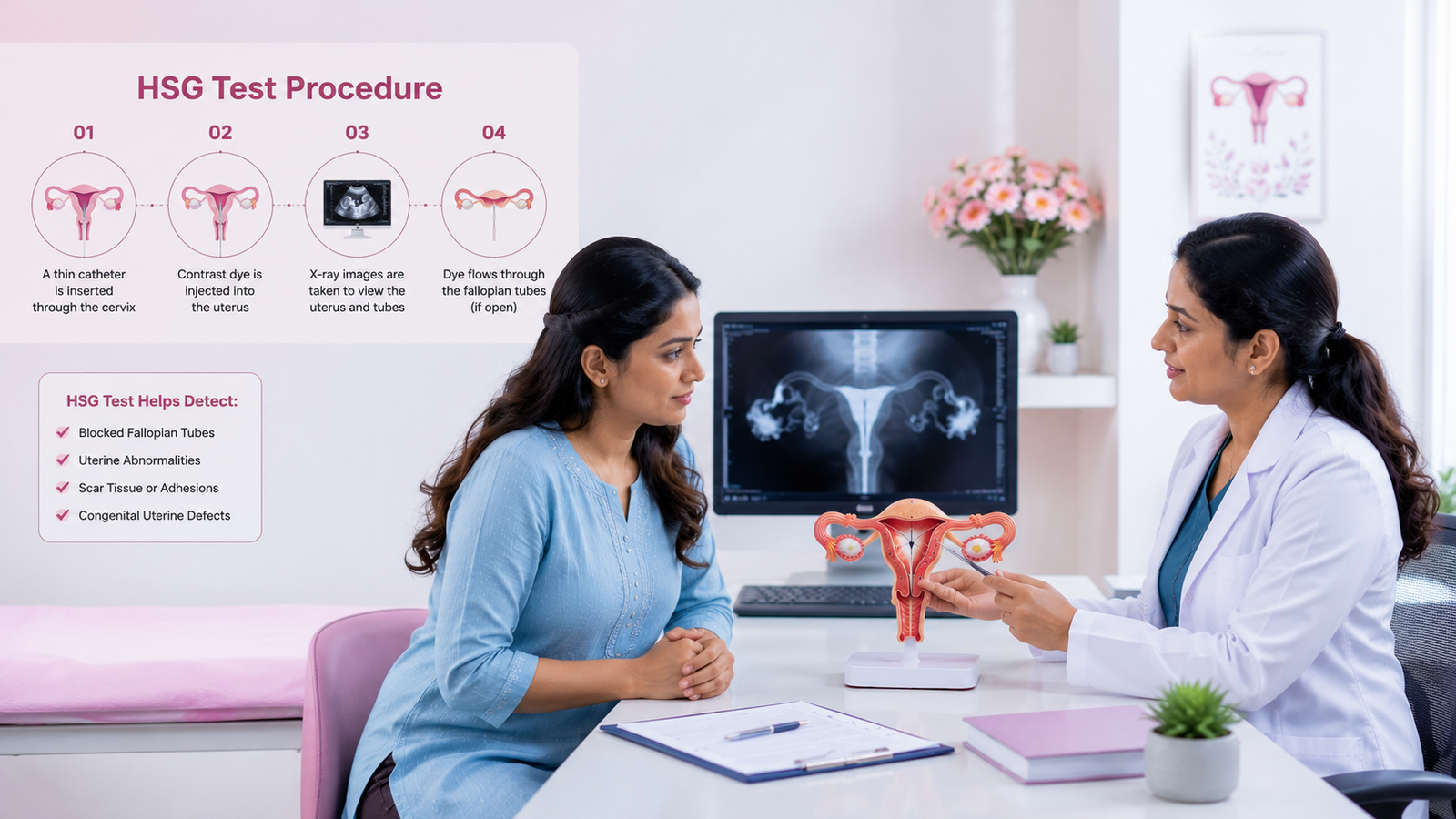
During the procedure:
- A speculum is placed in the vagina.
- A thin catheter is inserted through the cervix.
- A special contrast dye is injected into the uterus.
- X-ray images are taken as the dye flows through the uterus and fallopian tubes.
- If the tubes are open, the dye spills into the pelvic cavity.
The test usually takes 15–30 minutes.
How to Prepare for an HSG Test
Your doctor may advise you to:
- Schedule the test after your period but before ovulation.
- Avoid intercourse for a few days before the test if instructed.
- Inform your doctor about allergies or pregnancy.
- Take prescribed medication if recommended.
Always follow your doctor’s preparation instructions.
Is an HSG Test Painful?
Most women experience mild to moderate cramping, similar to menstrual cramps, during the procedure.
The discomfort usually lasts only a few minutes and resolves quickly.
What Can an HSG Test Detect?
An HSG test can identify:
- Blocked fallopian tubes
- Uterine abnormalities
- Congenital uterine defects
- Scar tissue inside the uterus
- Uterine polyps (in some cases)
- Adhesions affecting fertility
After the HSG Test
You may experience:
- Mild cramping
- Light spotting
- Slight leakage of contrast dye
Most women can resume normal activities the same day unless advised otherwise.