
I-Pill Is Not a Daily Birth Control Method
I-Pill Is Not a Daily Birth Control Method: What Every Woman Should Know
Many women believe that taking an I-Pill after unprotected intercourse is a convenient way to avoid pregnancy. While I-Pill can be effective in emergency situations, it is not designed to be used as a regular birth control method.
Repeated use of emergency contraceptive pills can affect your menstrual cycle and may lead to unwanted side effects. Understanding when and how to use I-Pill can help protect your reproductive health and support better family planning decisions.
What Is an I-Pill?
I-Pill is an emergency contraceptive pill used to reduce the risk of pregnancy after:
- Unprotected sexual intercourse
- Contraceptive failure
- Missed birth control pills
- Condom breakage or slippage
It works best when taken as soon as possible after unprotected intercourse, ideally within 24 hours.
However, it is intended only for emergency situations and should not replace regular contraception.
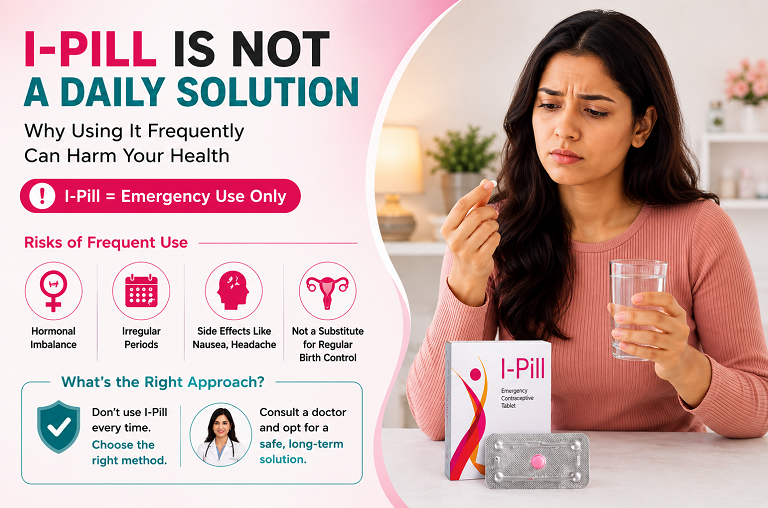
Why Is Frequent Use of I-Pill a Mistake?
Many women use I-Pill repeatedly because it seems convenient. However, emergency contraceptive pills contain a high dose of hormones compared to regular contraceptive methods.
Using them frequently may lead to several health concerns.
1. Irregular Periods
Repeated use can disturb your menstrual cycle, causing:
- Early periods
- Delayed periods
- Unexpected spotting
- Irregular bleeding
2. Hormonal Imbalance
Frequent exposure to high hormone doses may temporarily affect your body’s natural hormonal balance.
Some women may experience:
- Mood changes
- Fatigue
- Breast tenderness
- Headaches
3. Nausea and Discomfort
Common side effects include:
- Nausea
- Dizziness
- Abdominal discomfort
- Vomiting
4. Less Reliable Than Regular Contraception
Emergency contraceptive pills are not as effective as properly used long-term contraceptive methods.
Women who rely solely on I-Pill may face a higher risk of unintended pregnancy compared to those using regular birth control.
When Should You Use I-Pill?
I-Pill should be considered only in situations such as:
- Condom failure
- Missed contraceptive pills
- Unprotected intercourse
- Unexpected contraceptive accidents
It should not be your first choice for routine pregnancy prevention.
What Are Better Long-Term Contraceptive Options?
A gynecologist may recommend options based on your age, health, and family planning goals.
Birth Control Pills
Suitable for many women when taken under medical guidance.
Condoms
Provide pregnancy prevention and protection against sexually transmitted infections.
Intrauterine Devices (IUDs)
Long-term and highly effective contraceptive options.
Contraceptive Implants
Offer extended pregnancy prevention with minimal maintenance.
Injectable Contraceptives
Provide protection for several weeks or months depending on the type.
When Should You Consult a Gynecologist?
You should seek professional advice if:
- You have used I-Pill multiple times in a short period.
- Your periods have become irregular.
- You are looking for a long-term contraceptive solution.
- You have concerns about side effects.
A gynecologist can recommend a contraceptive method that suits your body, lifestyle, and future pregnancy plans.