
Irregular Periods
Causes, Symptoms & Treatment
Irregular Periods?
Causes, Symptoms, Treatment & When to See a Doctor
A regular menstrual cycle is an important indicator of a woman’s reproductive health. While it’s normal for periods to vary slightly from month to month, consistently irregular periods may indicate an underlying health condition that needs medical attention.
Whether your periods arrive too early, too late, are unusually heavy, very light, or stop altogether, understanding the possible causes can help you take the right steps toward better health.
In this guide, we’ll explain everything you need to know about irregular periods, including common causes, symptoms, treatment options, and when you should consult a gynecologist.
What Are Irregular Periods?
A typical menstrual cycle lasts between 21 and 35 days, with bleeding lasting 2 to 7 days.
Your periods may be considered irregular if:
- Your cycle is shorter than 21 days.
- Your cycle is longer than 35 days.
- The gap between periods changes significantly each month.
- You frequently miss periods.
- Your bleeding is unusually heavy or very light.
- Your periods last longer than 7 days.
Occasional changes can happen due to stress or lifestyle factors, but persistent irregularity should be evaluated by a healthcare professional.
Common Causes of Irregular Periods
1. Polycystic Ovary Syndrome (PCOS)
PCOS is one of the leading causes of irregular periods. Hormonal imbalance can prevent regular ovulation, causing delayed or missed menstrual cycles.
2. Stress
Emotional or physical stress can affect hormone production and temporarily disrupt your menstrual cycle.
3. Thyroid Disorders
Both hypothyroidism and hyperthyroidism can interfere with normal menstrual function.
4. Pregnancy
A missed period is often one of the earliest signs of pregnancy.
5. Excessive Exercise
High-intensity workouts combined with low body fat may affect hormone levels and delay menstruation.
6. Sudden Weight Changes
Rapid weight gain or weight loss can disrupt hormonal balance and affect ovulation.
7. Perimenopause
Women approaching menopause may experience irregular cycles before periods stop completely.
8. Certain Medications
Some medications, including hormonal contraceptives and specific medical treatments, may change menstrual patterns.
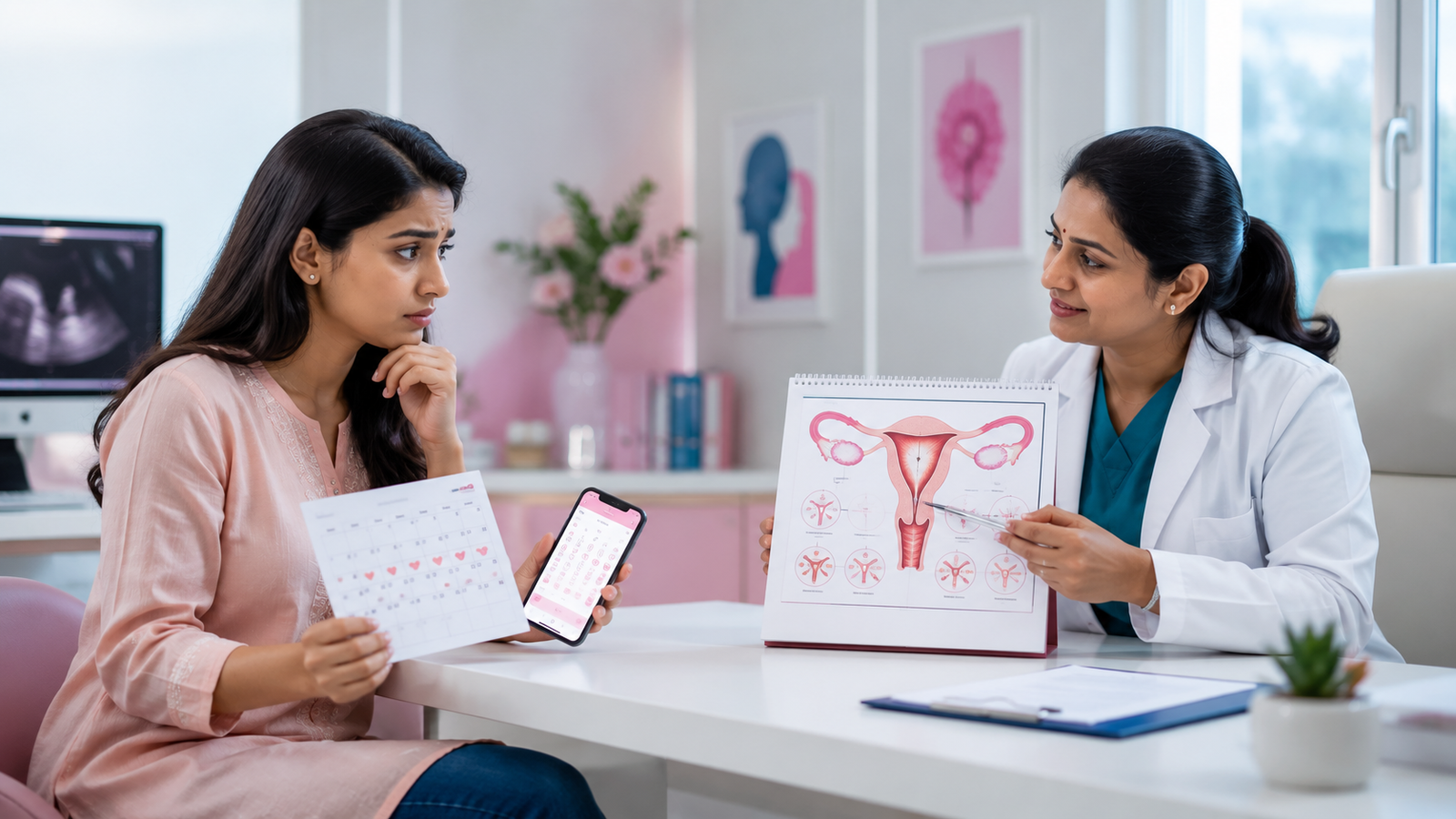
Symptoms That May Accompany Irregular Periods
You may also experience:
- Heavy bleeding
- Very light bleeding
- Missed periods
- Severe menstrual cramps
- Pelvic pain
- Acne
- Excess facial hair
- Weight gain
- Difficulty becoming pregnant
If these symptoms continue for several months, consult a gynecologist.
When Should You See a Doctor?
Seek medical advice if:
- You miss three or more periods without pregnancy.
- Your periods occur more frequently than every 21 days.
- Your periods are more than 35 days apart.
- You experience very heavy bleeding.
- Your period lasts longer than 7 days.
- You have severe pelvic pain.
- You are trying to conceive but have irregular cycles.
Early diagnosis can help identify the cause and improve treatment outcomes.
How Are Irregular Periods Diagnosed?
Your gynecologist may recommend:
- Medical history review
- Physical examination
- Pelvic examination
- Ultrasound scan
- Hormone blood tests
- Thyroid function tests
- Pregnancy test (if appropriate)
These evaluations help determine the underlying cause and guide treatment.
Treatment for Irregular Periods
Treatment depends on the underlying cause.
Options may include:
- Lifestyle modifications
- Weight management
- Hormonal medications
- Treatment for thyroid disorders
- PCOS management
- Fertility treatment when needed
- Stress management
Never self-medicate. Always follow your doctor’s recommendations.
Can Irregular Periods Affect Fertility?
Yes, in some cases.
Conditions such as PCOS or hormonal imbalances can interfere with ovulation, making it more difficult to become pregnant.
However, many women with irregular periods conceive successfully after receiving appropriate treatment.
Tips to Maintain a Healthy Menstrual Cycle
- Eat a balanced diet.
- Exercise regularly.
- Maintain a healthy weight.
- Sleep 7–8 hours daily.
- Manage stress through yoga or meditation.
- Track your menstrual cycle.
- Schedule regular gynecological checkups.
How to Increase the Chances of a Normal Delivery
You may improve your chances by:
- Attending regular prenatal checkups
- Maintaining a healthy pregnancy weight
- Eating a balanced diet
- Staying physically active as advised
- Practicing pregnancy-safe exercises
- Learning breathing and labor techniques
- Managing medical conditions early
Always follow your doctor’s advice throughout pregnancy.
Which Delivery is Better?
There is no single answer.
For a healthy pregnancy without complications, normal delivery is generally preferred because it offers quicker recovery and fewer surgical risks.
However, a medically recommended C-section is often the safest option when complications threaten the health of the mother or baby.
The goal is always a healthy mother and a healthy baby—not simply choosing one method over the other.