
Menopause Symptoms & Treatment
Menopause Symptoms: Signs, Causes & Treatment
Menopause is a natural stage in every woman’s life that marks the end of menstrual cycles and reproductive years. While it is a normal biological process, menopause can bring physical and emotional changes that affect daily life.
Understanding menopause symptoms, their causes, and available treatment options can help women manage this transition with confidence and maintain a healthy quality of life.
What Is Menopause?
Menopause is officially diagnosed when a woman has gone 12 consecutive months without a menstrual period, provided there is no other medical reason for the absence of periods.
Most women experience menopause between the ages of 45 and 55, with the average age being around 51 years.
Stages of Menopause
Perimenopause
The transitional phase before menopause, when hormone levels begin to fluctuate. It may last several years and is often when symptoms first appear.
Menopause
The point at which a woman has not had a menstrual period for 12 consecutive months.
Postmenopause
The years after menopause. Some symptoms improve over time, while long-term health considerations such as bone and heart health become increasingly important.
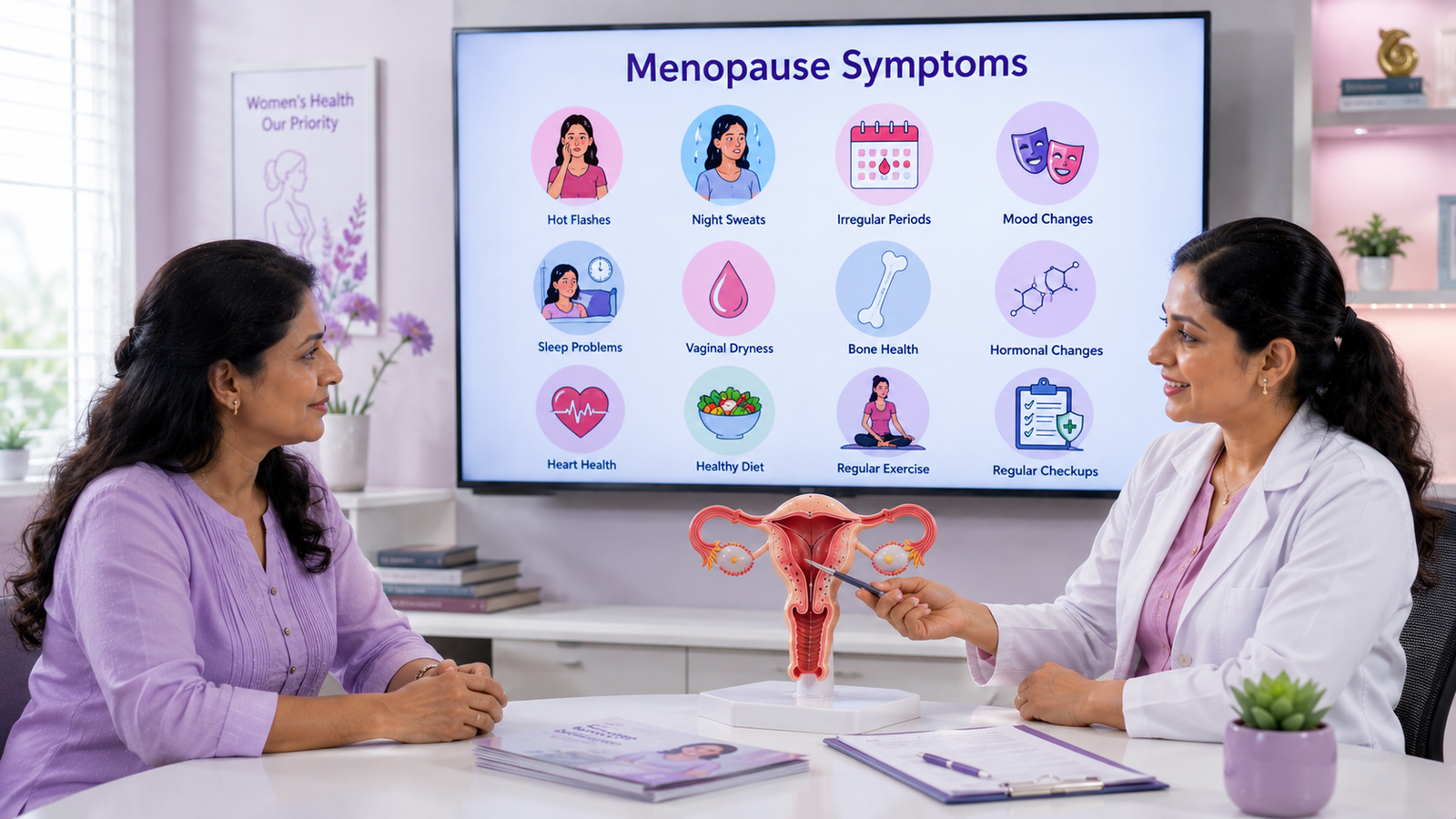
Common Menopause Symptoms
Women may experience one or more of the following symptoms:
Hot Flashes
Sudden feelings of warmth, often affecting the face, neck, and chest.
Night Sweats
Episodes of excessive sweating during sleep, which may disrupt rest.
Irregular Periods
Periods may become lighter, heavier, shorter, or farther apart before stopping completely.
Mood Changes
Hormonal fluctuations may contribute to mood swings, irritability, anxiety, or low mood.
Sleep Problems
Difficulty falling asleep or staying asleep is common during menopause.
Vaginal Dryness
Lower estrogen levels may cause vaginal dryness and discomfort during intercourse.
Reduced Libido
Some women notice changes in sexual desire during menopause.
Joint and Muscle Pain
Aches and stiffness may become more noticeable.
Memory and Concentration Problems
Some women report forgetfulness or difficulty concentrating, often referred to as “brain fog.”
What Causes Menopause?
Menopause occurs because the ovaries gradually produce less estrogen and progesterone. As hormone levels decline, ovulation eventually stops, leading to the end of menstrual cycles.
Long-Term Health Changes After Menopause
After menopause, women may have a higher risk of:
- Osteoporosis (bone loss)
- Heart disease
- Weight gain
- Urinary incontinence
- Vaginal atrophy
Regular health checkups can help monitor and manage these risks.
How Is Menopause Diagnosed?
Diagnosis is often based on:
- Medical history
- Age and menstrual history
- Physical examination
- Blood tests (if necessary)
- Evaluation of symptoms
Not every woman requires hormone testing.
Treatment Options for Menopause Symptoms
Treatment depends on the severity of symptoms and individual health needs.
Lifestyle Changes
- Regular exercise
- Healthy diet
- Stress management
- Adequate sleep
- Maintaining a healthy weight
Non-Hormonal Treatments
Certain medications or therapies may help manage symptoms such as hot flashes or mood changes.
Hormone Therapy
Hormone therapy may be appropriate for some women after careful evaluation of benefits and risks. It should always be discussed with a qualified healthcare professional.
Tips for Managing Menopause
- Eat calcium- and vitamin D-rich foods.
- Stay physically active.
- Avoid smoking.
- Limit alcohol intake.
- Practice relaxation techniques.
- Wear lightweight clothing to help manage hot flashes.
- Keep your bedroom cool at night.
- Attend regular gynecological checkups.
When Should You See a Doctor?
Consult a gynecologist if you experience:
- Heavy or prolonged bleeding
- Bleeding after menopause
- Severe hot flashes affecting daily life
- Persistent mood changes
- Pain during intercourse
- Urinary symptoms
- Concerns about bone or heart health
Why Choose Naari Women's Hospital?
At Naari Women’s Hospital, we provide personalized menopause care tailored to every woman’s needs. Our experienced gynecologists offer comprehensive evaluation, symptom management, lifestyle guidance, and evidence-based treatment options to help women navigate menopause comfortably and confidently.