Normal Delivery vs C-Section
Which is Better?
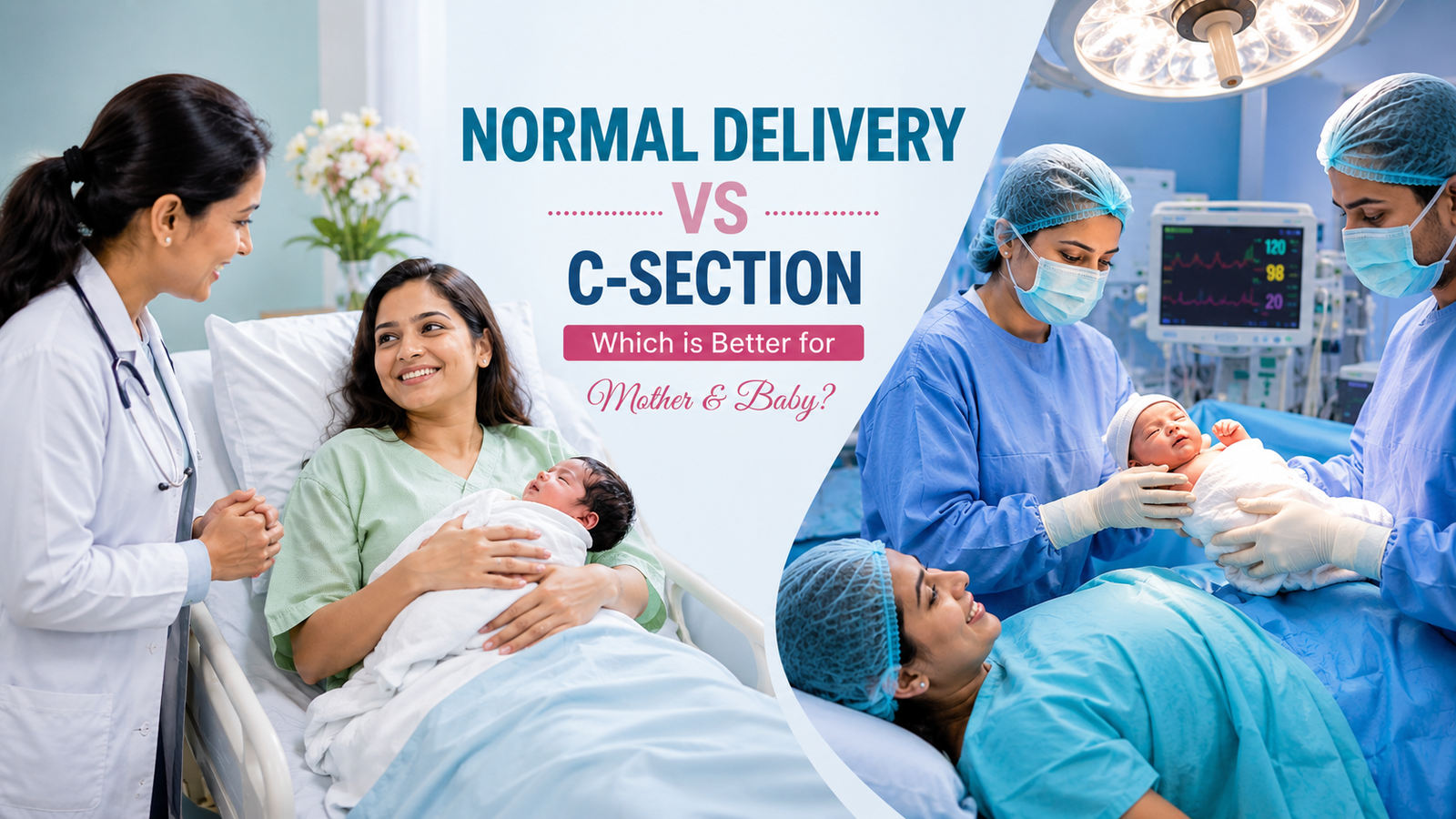
Normal Delivery vs C-Section?
Which is Better for Mother and Baby?
Bringing a baby into the world is one of life’s most exciting moments. One of the most common questions expectant parents ask is, “Should I choose normal delivery or a C-section?”
The answer is not the same for everyone. Every pregnancy is unique, and the safest delivery method depends on the mother’s health, the baby’s condition, and several medical factors.
Understanding the differences between normal delivery vs C-section can help you feel more confident and prepared when discussing your birth plan with your gynecologist.
What is Normal Delivery?
Normal delivery, also known as vaginal delivery, is the natural process of childbirth where the baby is born through the birth canal.
It usually begins with natural labor contractions, followed by cervical dilation and the baby’s birth.
For many healthy pregnancies, normal delivery is considered the preferred option because it allows for a quicker recovery and fewer surgical risks.
What is a C-Section?
A Cesarean Section (C-Section) is a surgical procedure in which the baby is delivered through an incision made in the mother’s abdomen and uterus.
Some C-sections are planned before labor begins, while others become necessary during labor due to unexpected complications.
Modern C-sections are very safe and can be life-saving for both mother and baby when medically required.
Normal Delivery vs C-Section: Key Differences
| Feature | Normal Delivery | C-Section |
|---|---|---|
| Delivery Method | Through the birth canal | Surgical procedure |
| Recovery Time | Faster | Longer |
| Hospital Stay | Usually 1–2 days | Usually 3–5 days |
| Pain After Delivery | Less long-term pain | More postoperative discomfort |
| Surgical Risk | Minimal | Higher because of surgery |
| Future Pregnancy | Easier recovery | May influence future delivery plans |
Benefits of Normal Delivery
Normal delivery offers several advantages for both mother and baby.
Faster Recovery
Most mothers recover quickly and can return to daily activities sooner.
Shorter Hospital Stay
Hospitalization is generally shorter compared to a C-section.
Lower Risk of Surgical Complications
Since no surgery is involved, there is a lower risk of infections, excessive bleeding, or anesthesia-related complications.
Better Breastfeeding Initiation
Many mothers can begin breastfeeding immediately after delivery.
Benefits for the Baby
Babies born vaginally often have improved lung function because fluid is naturally cleared from their lungs during birth.
Benefits of a C-Section
A C-section becomes the safest choice in certain medical situations.
Safe for High-Risk Pregnancies
It helps reduce risks when complications arise.
Planned Delivery
Scheduled C-sections provide predictability for mothers with medical conditions.
Prevents Emergency Situations
When labor is not progressing or the baby’s health is at risk, a C-section can prevent serious complications.
When is a C-Section Recommended?
Doctors may advise a C-section if:
- Baby is in breech position
- Placenta previa
- Twin or multiple pregnancy in certain situations
- Previous uterine surgery
- Large baby (Macrosomia)
- Fetal distress
- Umbilical cord complications
- Failure of labor to progress
- High blood pressure or severe preeclampsia
- Certain maternal infections
The decision is always made based on what is safest for both mother and baby.
Can Every Mother Have a Normal Delivery?
Not always.
Many women are excellent candidates for vaginal birth, but some pregnancies require surgical delivery due to medical reasons.
Regular prenatal checkups help doctors monitor the baby’s growth and determine the safest delivery option.
Recovery After Normal Delivery
Recovery is generally quicker.
Most mothers:
- Walk within a few hours
- Breastfeed early
- Return to routine activities sooner
- Experience less postoperative discomfort
Proper nutrition, hydration, and adequate rest support healing.
Recovery After a C-Section
Recovery takes longer because it involves major abdominal surgery.
Mothers should:
- Avoid lifting heavy objects
- Follow wound care instructions
- Take prescribed medications
- Attend follow-up appointments
- Walk gently to improve circulation
Most women recover well with proper medical guidance.
How to Increase the Chances of a Normal Delivery
You may improve your chances by:
- Attending regular prenatal checkups
- Maintaining a healthy pregnancy weight
- Eating a balanced diet
- Staying physically active as advised
- Practicing pregnancy-safe exercises
- Learning breathing and labor techniques
- Managing medical conditions early
Always follow your doctor’s advice throughout pregnancy.
Which Delivery is Better?
There is no single answer.
For a healthy pregnancy without complications, normal delivery is generally preferred because it offers quicker recovery and fewer surgical risks.
However, a medically recommended C-section is often the safest option when complications threaten the health of the mother or baby.
The goal is always a healthy mother and a healthy baby—not simply choosing one method over the other.