
Ovulation Calculator: Fertile Window
Ovulation Calculator: Understanding Your Fertile Window
If you’re planning a pregnancy, knowing when you are most fertile can significantly improve your chances of conceiving. An ovulation calculator helps estimate the days when you’re most likely to become pregnant by identifying your fertile window.
Although an ovulation calculator is a useful planning tool, it provides an estimate rather than a guarantee. Every woman’s menstrual cycle is unique, and ovulation can vary from month to month.
This guide explains how ovulation works, how to calculate your fertile window, common signs of ovulation, and tips to support your fertility.
What Is Ovulation?
Ovulation is the process in which one of your ovaries releases a mature egg. Once released, the egg travels through the fallopian tube, where it can be fertilized by sperm.
The egg survives for about 12–24 hours after ovulation, while sperm can survive in the female reproductive tract for up to 5 days. This is why pregnancy is possible even if intercourse occurs several days before ovulation.
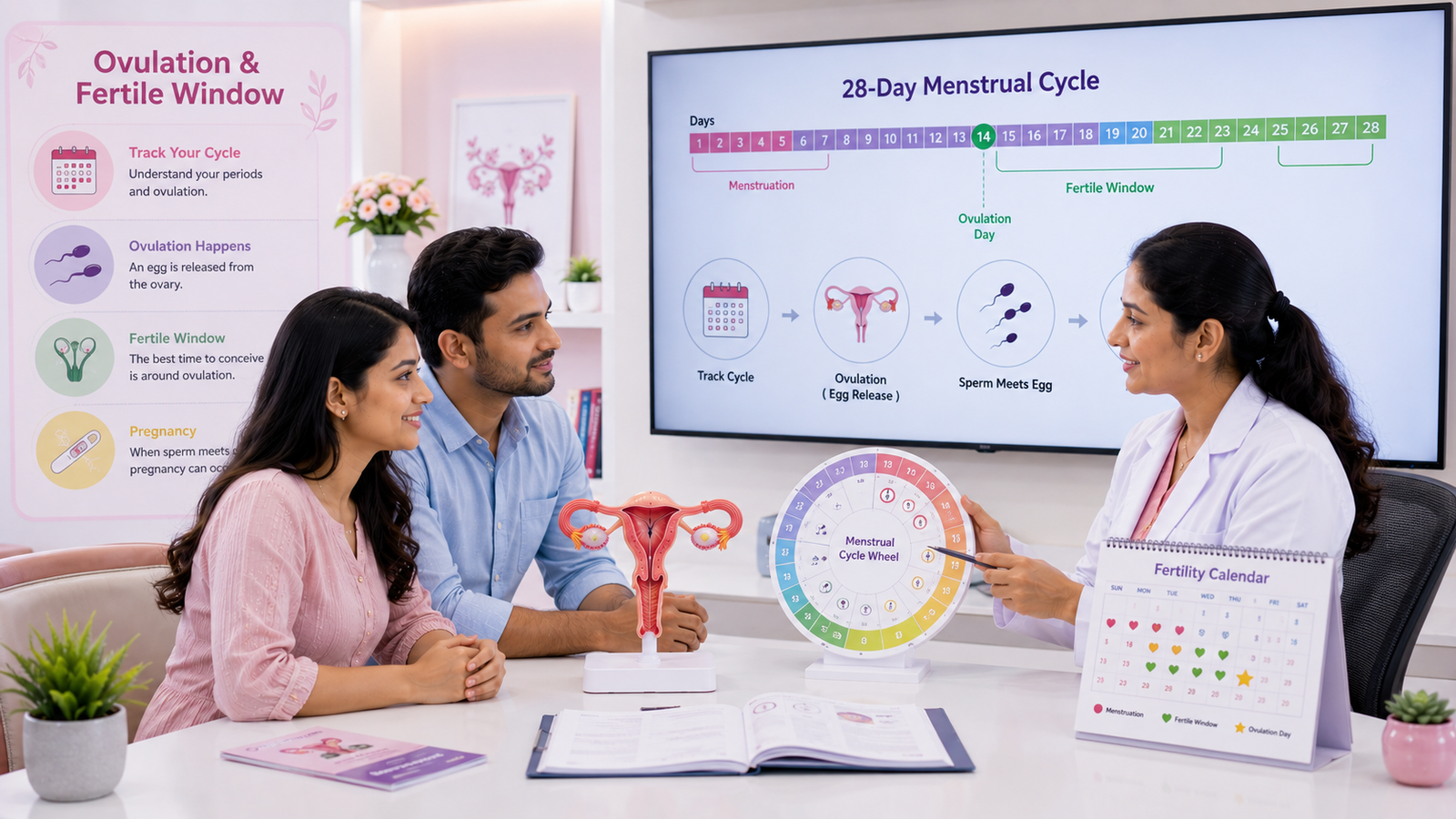
What Is the Fertile Window?
The fertile window is the period during your menstrual cycle when pregnancy is most likely.
For most women, it includes:
- The 5 days before ovulation
- The day of ovulation
- Sometimes the day after ovulation
This means your fertile window typically lasts about 6 days.
How Does an Ovulation Calculator Work?
An ovulation calculator estimates your fertile days based on:
- The first day of your last menstrual period (LMP)
- Your average menstrual cycle length
For example:
- 28-day cycle: Ovulation usually occurs around Day 14.
- 30-day cycle: Ovulation may occur around Day 16.
- 32-day cycle: Ovulation may occur around Day 18.
These are estimates. Stress, illness, travel, and hormonal changes can affect the timing of ovulation.
Common Signs of Ovulation
Many women notice changes around the time of ovulation, such as:
- Clear, stretchy cervical mucus (similar to egg whites)
- Mild pelvic discomfort (sometimes called mittelschmerz)
- Increased libido
- Slight rise in basal body temperature after ovulation
- Breast tenderness
- Increased sense of smell
Not every woman experiences noticeable symptoms.
How to Track Ovulation
You can improve accuracy by combining an ovulation calculator with other tracking methods:
Calendar Tracking
Record your menstrual cycles to estimate ovulation.
Ovulation Predictor Kits (OPKs)
These tests detect the luteinizing hormone (LH) surge that occurs before ovulation.
Basal Body Temperature (BBT)
Measure your temperature each morning before getting out of bed. A slight increase after ovulation can help identify your cycle pattern.
Cervical Mucus Observation
Monitoring changes in cervical mucus can help identify your fertile days.
Tips to Improve Your Chances of Pregnancy
If you’re trying to conceive:
- Have regular intercourse every 1–2 days during the fertile window.
- Maintain a healthy body weight.
- Eat a balanced diet.
- Avoid smoking and excessive alcohol.
- Exercise regularly.
- Get enough sleep.
- Manage stress.
When Should You See a Doctor?
You should seek medical advice if:
- You’re under 35 years and have been trying to conceive for 12 months without success.
- You’re 35 years or older and have been trying for 6 months.
- You have irregular menstrual cycles.
- You have a history of PCOS, endometriosis, or pelvic infections.
- You have experienced recurrent miscarriages.
Early evaluation can identify treatable causes of infertility.
Can an Ovulation Calculator Guarantee Pregnancy?
No.
An ovulation calculator estimates your fertile window but cannot guarantee pregnancy because many factors influence conception, including:
- Egg quality
- Sperm quality
- Fallopian tube health
- Uterine health
- Hormonal balance
- Overall reproductive health
If pregnancy does not occur despite regular attempts, a fertility evaluation may be helpful.