
Pelvic Pain in Women
Pelvic Pain in Women: Causes, Symptoms & Treatment
Pelvic pain is a common health concern among women and can range from mild discomfort to severe, persistent pain. It may occur suddenly or develop gradually and can be related to the reproductive organs, urinary system, digestive tract, or muscles and ligaments of the pelvis.
While occasional pelvic pain may not be serious, persistent or severe pain should never be ignored. Understanding the possible causes and knowing when to seek medical care can help ensure timely diagnosis and treatment.
What Is Pelvic Pain?
Pelvic pain is discomfort felt in the lower abdomen or pelvic region, below the belly button. It can be:
- Sharp or dull
- Constant or intermittent
- Mild or severe
- Short-term (acute) or long-lasting (chronic)
The location and nature of the pain often provide important clues about the underlying cause.
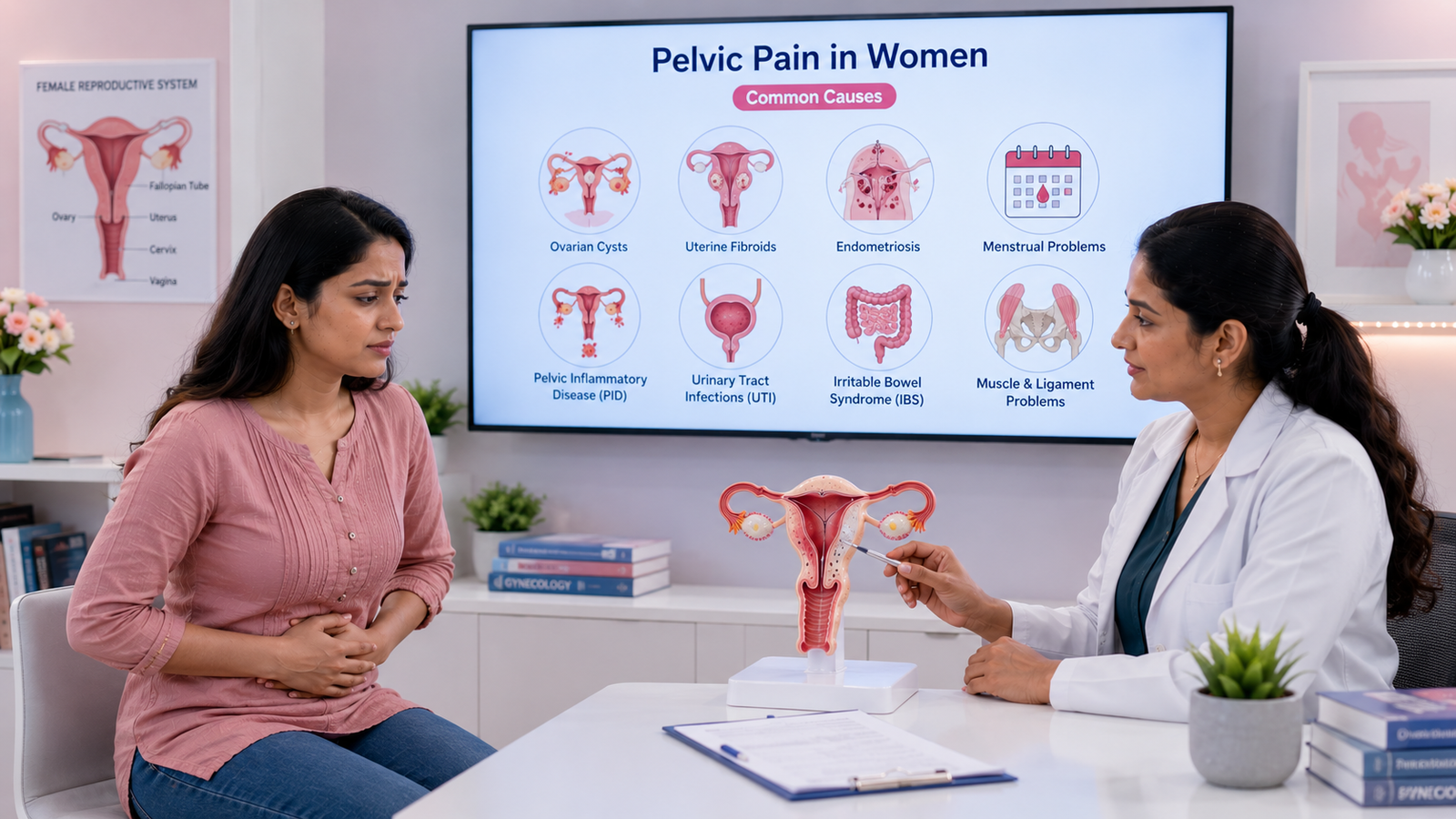
Common Causes of Pelvic Pain in Women
1. Menstrual Cramps (Dysmenorrhea)
Pain during menstruation is one of the most common causes of pelvic discomfort, especially in younger women.
2. Endometriosis
Endometriosis occurs when tissue similar to the uterine lining grows outside the uterus, often causing chronic pelvic pain and painful periods.
3. Ovarian Cysts
Most ovarian cysts are harmless, but larger or ruptured cysts can cause pelvic pain.
4. Uterine Fibroids
Fibroids are non-cancerous growths in the uterus that may lead to pelvic pressure, pain, and heavy menstrual bleeding.
5. Pelvic Inflammatory Disease (PID)
PID is an infection of the female reproductive organs that may cause pelvic pain, fever, and abnormal vaginal discharge.
6. Urinary Tract Infection (UTI)
A UTI may cause pelvic discomfort along with burning during urination and frequent urges to urinate.
7. Ovulation Pain (Mittelschmerz)
Some women experience mild pain during ovulation, usually midway through the menstrual cycle.
8. Pregnancy-Related Causes
Pelvic pain during pregnancy may result from normal stretching of ligaments, but severe pain requires immediate medical evaluation to rule out serious conditions.
9. Digestive Disorders
Conditions such as irritable bowel syndrome (IBS), constipation, or appendicitis can also cause pelvic pain.
Symptoms That May Accompany Pelvic Pain
Depending on the cause, you may also experience:
- Heavy or irregular periods
- Pain during intercourse
- Painful urination
- Frequent urination
- Vaginal discharge
- Fever
- Nausea or vomiting
- Bloating
- Lower back pain
When Should You See a Doctor?
Seek medical attention if:
- Pelvic pain is severe or sudden.
- Pain lasts for several days.
- You have fever or chills.
- You experience heavy vaginal bleeding.
- Pain occurs during pregnancy.
- You have difficulty urinating.
- Pain is associated with vomiting or fainting.
Prompt evaluation is important to identify potentially serious conditions.
How Is Pelvic Pain Diagnosed?
Your gynecologist may recommend:
- Medical history review
- Physical and pelvic examination
- Pelvic ultrasound
- Urine tests
- Blood tests
- Pregnancy test (when appropriate)
- Vaginal swab
- MRI or CT scan in selected cases
- Laparoscopy for complex cases
The investigations depend on your symptoms and suspected diagnosis.
Treatment for Pelvic Pain
Treatment depends on the underlying cause and may include:
- Pain-relieving medications
- Antibiotics for infections
- Hormonal therapy
- Lifestyle modifications
- Physiotherapy for pelvic floor disorders
- Surgical treatment for certain conditions such as fibroids or endometriosis
Your doctor will recommend the most appropriate treatment based on your diagnosis.
Can Pelvic Pain Be Prevented?
While not all causes can be prevented, you can reduce your risk by:
- Maintaining good reproductive health
- Practicing safe sex
- Treating infections promptly
- Attending regular gynecological checkups
- Staying physically active
- Maintaining a healthy weight
Why Choose Naari Women's Hospital?
At Naari Women’s Hospital, we provide comprehensive evaluation and treatment for pelvic pain using advanced diagnostic techniques and personalized care. Our experienced gynecologists identify the underlying cause and create customized treatment plans to improve your health and quality of life.