Pregnancy After 35: Risks & Care
Pregnancy After 35: What Women Should Know
Having a baby after 35 is increasingly common, and many women have healthy pregnancies and healthy babies in their late 30s and 40s. However, fertility gradually declines with age, and some pregnancy-related risks become more likely, particularly as age increases.
The important point is that age alone does not determine how a pregnancy will progress. Your overall health, medical history, previous pregnancies, and individual risk factors all help your obstetrician decide what care and monitoring you may need.
What Happens to Fertility After 35?
Fertility decreases with age because both the number and quality of eggs decline over time. The decline becomes more noticeable after 35 and continues with increasing age.
This does not mean pregnancy is impossible after 35. Many women conceive naturally, while others may benefit from fertility evaluation or treatment.
Because fertility can decline more quickly in the late 30s, it is useful to discuss pregnancy plans with your gynecologist rather than delaying evaluation when you have concerns.
What Are the Risks of Pregnancy After 35?
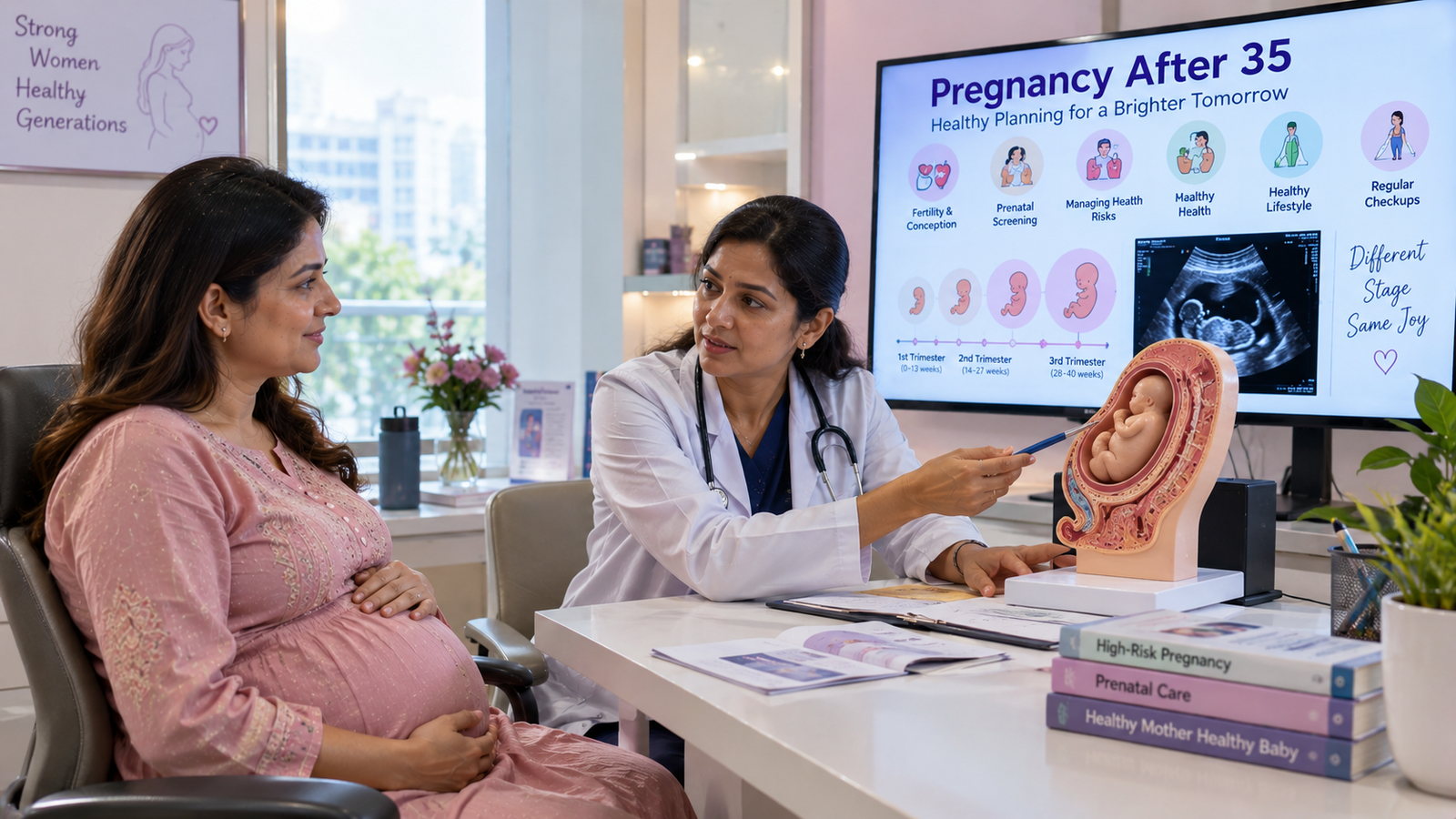
Pregnancy after 35 can be associated with a higher likelihood of certain complications. The level of risk varies with age and individual health conditions. ACOG notes increased risks for outcomes including miscarriage, stillbirth, chromosomal abnormalities, hypertensive disorders of pregnancy, gestational diabetes, and some fetal growth-related outcomes.
1. Chromosomal Abnormalities
The chance of a pregnancy having a chromosomal abnormality increases with maternal age. Conditions commonly discussed in prenatal screening include Down syndrome, Edwards syndrome, and Patau syndrome.
Importantly, screening does not mean that a problem is expected. Prenatal screening estimates the chance of certain conditions, while diagnostic tests can provide more definitive information about specific genetic conditions.
2. Miscarriage
The risk of miscarriage increases with age. This is one reason early pregnancy care and appropriate evaluation are important.
3. High Blood Pressure and Preeclampsia
Age 35 or older is recognized as one moderate risk factor for preeclampsia. Other factors, such as first pregnancy, obesity, family history, IVF, or certain medical conditions, can add to the overall risk.
Your doctor may therefore pay particular attention to blood pressure and other signs of preeclampsia during prenatal visits.
4. Gestational Diabetes
The risk of gestational diabetes increases with advancing maternal age, particularly in women in their 40s. Other factors, including weight and previous medical history, also affect risk.
5. Multiple Pregnancy
Women over 35 are more likely to release more than one egg during a menstrual cycle, and multiple pregnancies are also more common with some fertility treatments.
How to Prepare for Pregnancy After 35
Schedule a Preconception Checkup
A preconception appointment is a useful first step. Your obstetrician may review:
- Previous pregnancies
- Medical conditions
- Family history
- Current medications
- Vaccination status
- Nutrition and lifestyle
- Fertility concerns
ACOG specifically recommends prepregnancy counseling for women planning pregnancy after 35.
Start Folic Acid Before Pregnancy
A prenatal vitamin containing at least 400 micrograms of folic acid daily is recommended beginning at least one month before pregnancy and through the first 12 weeks for average-risk women. Some women need a higher dose based on their medical history, so this should be discussed with a healthcare professional.
Review Your Medications
If you take prescription medicines, over-the-counter medicines, or supplements, discuss them with your doctor before trying to conceive. Some medications may need to be changed or adjusted before or during pregnancy.
Do not stop a prescribed medicine on your own.
Focus on Healthy Lifestyle Habits
Before pregnancy:
- Maintain a healthy weight.
- Eat a balanced diet.
- Stay physically active.
- Avoid smoking.
- Avoid alcohol and recreational drugs.
- Get adequate sleep.
These measures support overall health and pregnancy preparation.
What Prenatal Tests May Be Offered?
Prenatal care may include routine examinations and screening tests, with additional monitoring depending on your age, health, and pregnancy.
Ultrasound
Ultrasound can help assess pregnancy development, fetal anatomy, and growth when indicated.
Prenatal Genetic Screening
Genetic screening options can include blood-based screening, ultrasound-based screening, and cell-free DNA screening. ACOG recommends that screening and diagnostic testing options be discussed and offered to all pregnant individuals, regardless of age.
Diagnostic Genetic Testing
When indicated or chosen after counseling, tests such as chorionic villus sampling (CVS) or amniocentesis can provide diagnostic information about certain chromosomal conditions.
Blood Pressure and Diabetes Monitoring
Routine prenatal care includes monitoring for conditions such as hypertension and gestational diabetes, with testing based on standard antenatal care and individual risk factors.
Does Pregnancy After 35 Mean You Need a C-Section?
No.
Age alone is not an indication for cesarean delivery. ACOG states that vaginal delivery can be appropriate when there are no other maternal or fetal reasons for cesarean birth.
The mode of delivery should be based on your clinical situation, baby’s condition, pregnancy history, and informed discussion with your obstetrician.
When Should You Seek Fertility Help?
Because fertility declines with age, evaluation should not necessarily be delayed for a full year.
ACOG recommends infertility evaluation after 6 months of trying for women older than 35, while women over 40 may benefit from discussing evaluation with an ob-gyn sooner.
You may also want earlier advice if you have:
- Irregular periods
- PCOS
- Endometriosis
- Previous pelvic surgery
- Previous fertility treatment
- A known fertility concern
Can Women Have a Healthy Pregnancy After 35?
Yes. Many women in their late 30s and 40s have healthy pregnancies.
The goal of prenatal care is not to assume that complications will occur, but to identify individual risks early and provide appropriate monitoring and treatment when needed. Early and regular prenatal care can be especially valuable when pregnancy occurs at an older age.
Why Choose Naari Women's Hospital?
At Naari Women’s Hospital, pregnancy care is personalized according to each woman’s age, health, pregnancy history, and individual needs. Our experienced obstetricians provide preconception counseling, antenatal monitoring, ultrasound evaluation, prenatal screening guidance, and maternity care to support women throughout pregnancy.