
Trying to Conceive? Understanding
IUI & IVF Fertility
Introduction
Trying to conceive can be an emotional and challenging journey for many couples. While some achieve pregnancy naturally, others may need medical support.
Understanding fertility treatments like IUI (Intrauterine Insemination) and IVF (In Vitro Fertilization) can help you make informed decisions and choose the right path.
Every fertility journey is unique, and with proper diagnosis, counseling, and personalized treatment, your chances of success can improve significantly.
What is Infertility?
Infertility is generally defined as the inability to conceive after:
- 12 months of regular unprotected intercourse (for women under 35)
- 6 months (for women above 35)
It can affect both men and women due to various reasons.
Common Causes of Infertility
Female Factors:
- Irregular ovulation
- Blocked fallopian tubes
- PCOS (Polycystic Ovary Syndrome)
- Endometriosis
Male Factors:
- Low sperm count
- Poor sperm motility
- Abnormal sperm shape
Other Factors:
- Age
- Lifestyle (stress, smoking, obesity)
- Hormonal imbalance
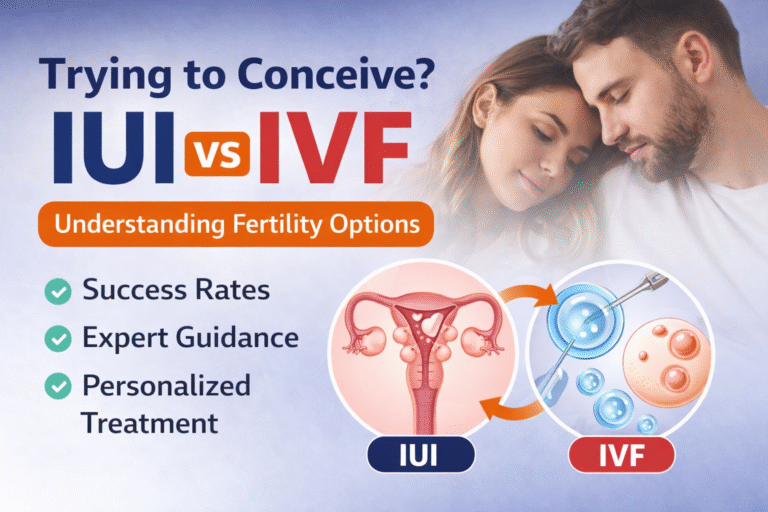
What is IUI (Intrauterine Insemination)?
IUI is a simple and less invasive fertility treatment.
How IUI Works:
- Sperm is collected and processed
- Healthy sperm is directly inserted into the uterus
- This increases chances of fertilization
Who Should Consider IUI?
- Mild male infertility
- Unexplained infertility
- Cervical mucus issues
What is IVF (In Vitro Fertilization)?
IVF is a more advanced fertility treatment.
How IVF Works:
- Eggs are retrieved from ovaries
- Fertilization happens in a lab
- Embryo is transferred into uterus
Factors Affecting Fertility Treatment Success
- Age (most important factor)
- Egg and sperm quality
- Lifestyle habits
- Underlying medical conditions
- Clinic expertise
Tips to Improve Fertility Naturally
- Maintain healthy weight
- Eat balanced diet
- Avoid smoking and alcohol
- Reduce stress
- Track ovulation